How Gutter Cleaning in Hackettstown Protects Your Roof and Foundation

A gutter system does quiet work. It catches thousands of gallons of rainwater over the course of a year, moves that water off the roof, and sends it away from the house before it can soak framing, stain siding, erode landscaping, or settle against the foundation. When it works, nobody thinks about it. When it fails, the damage tends to show up in expensive places.
That is why Gutter Cleaning Hackettstown is not a cosmetic service or a seasonal chore you can put off indefinitely. In a town like Hackettstown, where homes deal with leaf drop in fall, snow and ice in winter, and hard spring rains, gutters sit right at the intersection of weather and structure. A clogged gutter does not stay a gutter problem for long. It becomes a roof problem, a fascia problem, a siding problem, and eventually a basement or foundation problem.
Homeowners often notice the obvious signs first. Water spills over the edge during a storm. Plants start growing in the trough. A downspout barely trickles when it should be moving a steady stream. The less obvious signs are the ones that cost more: shingle edges staying wet, wood trim softening, mulch trenches forming below the eaves, hairline foundation cracks widening over time, and moisture finding its way into a finished basement corner that had always stayed dry.
Why clogged gutters hit the roof first
A roof sheds water by design, but only if the lower edge can drain freely. Gutters are part of that drainage plane. Once leaves, seed pods, asphalt granules, and roof moss collect in the channel, water has nowhere to go. It ponds. It backs up. In heavy rain, it spills over the face. In colder weather, it can sit long enough to contribute to ice formation along the eaves.
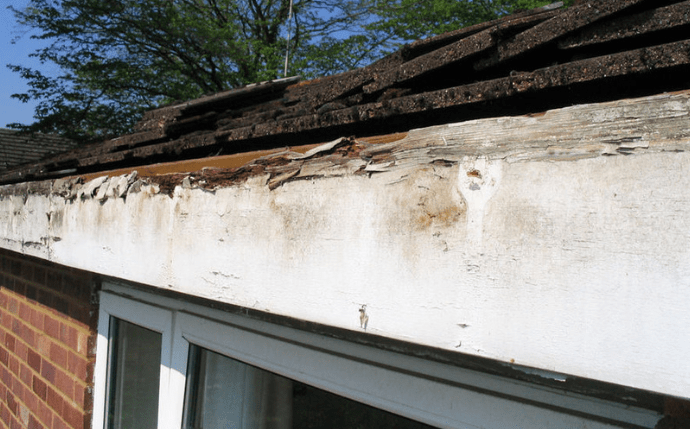
That standing water creates a chain reaction. The first point of stress is usually the fascia board and the roof edge. Even well-installed gutters become heavy when packed with wet debris. Add several inches of rainwater, and the load increases fast. Hangers loosen. Gutters begin to pitch the wrong way. The front lip may sag. Water then starts running behind the gutter instead of through it, which is one of the fastest ways to rot roofline wood.
On older homes in Hackettstown, especially properties with mature trees close to the roof, this is common. Maple helicopters, oak leaves, pine needles, and twigs do not just lie in the gutter. They create a dam. Once that dam holds moisture, roof debris breaks down into a dense sludge that blocks outlet holes and downspouts. At that point, even a moderate rain can act like a stress test.
There is also the issue of shingle life. Asphalt shingles are built to shed water, not hold it at the bottom edge. If water repeatedly backs up under the last course, the roof deck beneath that edge can stay damp longer than it should. In warm weather, that can speed deterioration. In freezing weather, it can turn into a more destructive cycle as water freezes, expands, and pries at materials around the eaves.
I have seen roofs that looked fine from the street but had soft sheathing right above clogged gutters. The homeowner thought the leak was coming from somewhere higher. It was not. The roof was doing its job until the drainage system stopped doing its part.
Hackettstown weather makes timing matter
Local conditions shape how often gutters need attention. Hackettstown is not dealing with one simple season of debris. It has a full cycle. Spring brings blossoms, seed drop, and storms. Summer can grow algae and pack down earlier debris after humid stretches. Fall loads gutters heavily with leaves. Winter can lock small clogs into solid ice, especially on shaded rooflines.
That matters because a gutter can go from partially obstructed to nonfunctional in one season. A home surrounded by trees may need cleaning more than once a year. A newer development with fewer large trees may get by with less frequent service, though even then, roof granules and windblown debris still collect. People sometimes assume a house with no overhanging branches is safe to ignore. It is safer, not immune.
The freeze-thaw cycle deserves special attention. When water cannot drain and temperatures dip, ice can form in the gutter trough and around the downspout opening. That ice adds weight and blocks the path further. During the next thaw, water may overflow behind the gutter, run down the fascia, and reach soffits and siding. In some cases, it can enter wall cavities. The homeowner may not realize the source until paint peels or stains appear indoors.
A lot of water issues blamed on “old house settling” or “just a little basement dampness” start much higher up than people think. Rainwater follows gravity, but it also follows opportunity. A clogged or detached gutter gives it plenty of opportunities.
The path from overflowing gutters to foundation trouble
If roof damage gets the early attention, foundation damage is the slower threat that often goes unnoticed. Gutters are designed to move runoff away from the base of the house. When that water drops straight down at the foundation line, problems build gradually.
Soil can only absorb so much water at once. During a sustained storm, overflow from clogged gutters pounds the same narrow strip of ground again and again. The first thing homeowners usually see is splashback. Mud marks appear on the siding. Flower beds wash out. Decorative stone shifts. Then the grading begins to change. Small channels form in the soil. Mulch thins. Low spots develop where water lingers.
Over time, that repeated saturation can increase pressure against foundation walls, especially if the home already has grading issues or older waterproofing. In a basement, this may show up as dampness along the cove joint, that seam where the floor meets the wall. In crawl spaces, it can mean higher humidity, musty smells, and a better environment for mold. On slab homes, persistent saturation can still affect the soil supporting the perimeter.
Not every wet basement is caused by clogged gutters, but neglected gutters are one of the simplest contributing factors to rule out and one of the cheapest to correct before larger repairs become necessary. Compared with foundation excavation, interior drainage systems, or structural crack repair, routine cleaning is minor.
One strong storm can move a surprising amount of roof runoff. A mid-sized roof collects a large volume of rain quickly, and all of it has to go somewhere. If the gutter system channels it properly, that water exits at designated downspouts and is directed away from the house. If the system is blocked, the entire perimeter can become a waterfall.
What homeowners in Hackettstown tend to miss
The biggest misconception is that if water is coming over the top of the gutter, the gutter must be undersized. Sometimes that is true, but not often. More commonly, the system is choked at the outlets, pitched poorly due to weight and loosening hangers, or lined with compacted debris that leaves very little open capacity.
Another thing people miss is downspout blockage. A gutter can look clear from above and still fail because the downspout is packed with wet leaves. This is especially common where elbows trap material. During cleaning, the downspouts should be tested with water, not just visually inspected from the roofline.
There is also a tendency to focus only on visible leaf piles. Fine debris causes plenty of damage too. Shingle granules, small twigs, roof grit, and decomposed organic matter form a muddy base that slows drainage even after larger leaves are removed. That is why a quick pass with a leaf blower is not always enough. Depending on buildup, the trough may need to be scooped, flushed, and checked for flow at every outlet.
Gutter guards deserve a measured view as well. They can reduce cleaning frequency, especially on homes under heavy leaf cover, but they do not eliminate maintenance. Some systems handle large leaves well but allow fine sediment through. Others can collect debris on top and still require periodic clearing. Guards are a tool, not a free pass.
How neglected gutters shorten roof system life
Roof systems fail one weak point at a time. People tend to think in terms of shingles only, but the roof edge is a layered assembly: shingles, underlayment, drip edge, sheathing, fascia, soffit, and gutter attachment points. If gutters stay clogged, each of those parts sees more moisture exposure than it was meant to handle.
Wood rot in fascia boards is common because the damage stays hidden behind the gutter. By the time the gutter pulls loose or the paint starts bubbling, the wood underneath may already be soft. Repairing that often means removing sections of gutter, replacing trim, repainting, and rehanging the system. It is far more involved than a standard cleaning visit.
Soffits can suffer too, especially if water runs back along the underside. Ventilated soffits are meant to help attic airflow, not absorb repeated wetting. Once moisture enters those panels or the framing behind them, the repair may spread beyond the gutter line.
Then there is ice. In winters that swing above and below freezing, clogged gutters can contribute to the kind of edge icing that strains hangers and keeps the roof edge colder and wetter. Not every ice dam starts with poor gutter maintenance, but blocked drainage never helps. On homes with marginal attic insulation or ventilation, clogged gutters make a bad setup worse.
Signs your home is asking for gutter service
Some houses tell you directly that the gutters need attention. Others are subtler. If you see water cascading over the edges in rain, service is overdue. If gutters sag, separate at the seams, or pull away from the fascia, the weight of debris and standing water may already be taking a toll. Water stains on siding, peeling paint near the roofline, and eroded soil beneath eaves all point in the same direction.
A few signs deserve fast action:
- Water overflowing during ordinary rainfall, not just major storms
- Plants, moss, or visible sludge inside the gutter channel
- Downspouts that drip weakly or not at all during rain
- Gutters pulling away from the house or visibly dipping between hangers
- Basement dampness or soil erosion concentrated below roof edges
Those symptoms do not always mean severe damage has already occurred, but they do mean the system is not protecting the house the way it should.
Cleaning is also an inspection opportunity
One practical benefit of professional gutter maintenance is that it creates a regular inspection point. During cleaning, small defects often show up before they become bigger repairs. A technician may notice a loose spike, a hidden seam leak, rust beginning in one section, a detached downspout strap, or a corner where water has been running behind the gutter.
That kind of early notice matters. Most homeowners do not spend much time at roof level, and they should not have to. Yet that is exactly where minor issues start. Catching a separated seam or soft fascia early can prevent interior water damage later. Spotting roof granules in the gutter can also raise a flag about shingle wear, especially on older roofs.
A good service visit should not just remove debris and leave. It should confirm flow, look at fastening points, check that downspout discharge is carrying water away from the foundation, and note any sections that need repair or re-pitching. The cleaning itself solves the immediate problem. The inspection helps prevent the next one.
How often Hackettstown homes usually need gutter cleaning
There is no honest one-size-fits-all answer. The right schedule depends on tree cover, roof design, local drainage, and the age and condition of the gutter system. A home under heavy oak or maple cover may need service in late spring and again after fall leaf drop. A house with pine trees nearby might need periodic checks because needles can build up steadily and block outlets even when the gutter does not look full.
Homes with steep roofs often wash debris into gutters more aggressively. Valleys can concentrate runoff and dump leaves into one section. Lower-pitched roofs may hold debris differently but still contribute grit and granules over time. If a property has had basement moisture before, keeping the gutters moving is not optional maintenance, it is preventive water management.
For many homeowners, the best schedule comes from observation over one full year. Clean the system, watch how quickly it refills, and adjust. The mistake is waiting until there is visible overflow. By then, the house has already been exposed to avoidable water concentration.
The cost of cleaning versus the cost of repair
Home maintenance decisions often come down to timing and budget. Gutter cleaning is rarely exciting, which is exactly why it gets deferred. But when you compare its cost with the repairs that neglected gutters can trigger, the math becomes straightforward.
A routine cleaning is usually modest compared with replacing rotted fascia, resecuring detached gutters, repairing soffits, sealing basement seepage points, regrading soil, or addressing foundation movement. Even cosmetic repairs add up. Repainting stained siding, replacing washed-out landscaping, or repairing cracked walkways caused by poor drainage can easily exceed years of regular maintenance.
The more expensive cases are the ones where multiple issues overlap. A clogged gutter causes overflow. Overflow saturates the soil. Saturated soil contributes to basement moisture. At the same time, trapped water rots the fascia, which weakens the gutter attachment and creates even more overflow. The homeowner ends up paying for both roofline and ground-level repairs because one simple drainage system was ignored.
Choosing service with judgment, not just a low price
Not all gutter cleaning is equal. The lowest-price option may remove visible leaves and little else. For a house that has never had issues and has very light debris, that may be enough. For most homes in Hackettstown, especially older ones or those with mature trees, the work should be more thorough.
What matters is whether the service actually restores performance. That means the channels are cleared, downspouts are flowing, problem spots are identified, and the homeowner gets a realistic picture of the system's condition. If a section is pitched wrong, if discharge is too close to the foundation, or if fascia damage is starting, it helps to know now.
This is where local familiarity counts. Companies that regularly handle Gutter Cleaning Hackettstown understand the seasonal patterns, the common debris types, and the housing mix in the area. A steep-roof colonial under old maples poses different challenges than a ranch on an open lot. Experience shows up in small decisions, like when a flush test is enough and when a downspout should be disassembled, or when a sagging section points to blockage versus failing wood behind the gutter.
A small maintenance habit with structural payoff
Gutters do not ask for much. They need to stay clear, stay attached, and move water where it belongs. When that happens, the https://www.merchantcircle.com/just-gutters-1-hackettstown-nj roof edge dries as it should, the siding stays cleaner, the soil around the home remains more stable, and the foundation sees less unnecessary water pressure.
That is the real value of timely gutter maintenance. It protects the expensive parts of the house by taking care of a relatively simple system before weather turns it into a weak point. In Hackettstown, where houses face a full range of seasonal stress, that kind of preventive care is not overcautious. It is practical ownership.
If your gutters have not been checked in a while, the safest assumption is not that they are fine. It is that they are quietly collecting the kind of debris that turns rain into trouble. Clean gutters will not solve every roofing or foundation issue, but neglected gutters can certainly create them. Keeping them clear is one of the most direct ways to protect both the top of your house and the structure holding it up.
Just Gutters LLC
Address: 262 Main St, Hackettstown, NJ 07840
Phone number: +12013319454
FAQ About Gutter Cleaning Hackettstown
How much should a gutter clean cost?
Professional gutter cleaning typically costs between $163 and $333, with a national average of around $210 to $250 for a standard-sized home.
What months should you clean gutters?
You should clean your gutters twice a year—once in late autumn (November to December) and once in late spring (April to May).
Is it worth paying for gutter cleaning?
Yes, paying for gutter cleaning is worth it because it prevents thousands of dollars in water damage, roof leaks, and structural repairs.